
The current turmoil in the Middle East has once again demonstrated just how volatile fuel prices can be. Driven by supply uncertainty, market speculation, and rapid shifts in futures pricing, the resulting price instability has created a challenging environment for petroleum marketers.
The New Reality: Intraday Volatility Requires Intraday Synchronization
Petroleum marketers who were typically getting one, or at most, two updates per day are now wrestling with multiple updates a day. In this environment, the real challenge is no longer just receiving the new price, it is ensuring that every part of the organization receives it, understands it, and acts on it without delay.
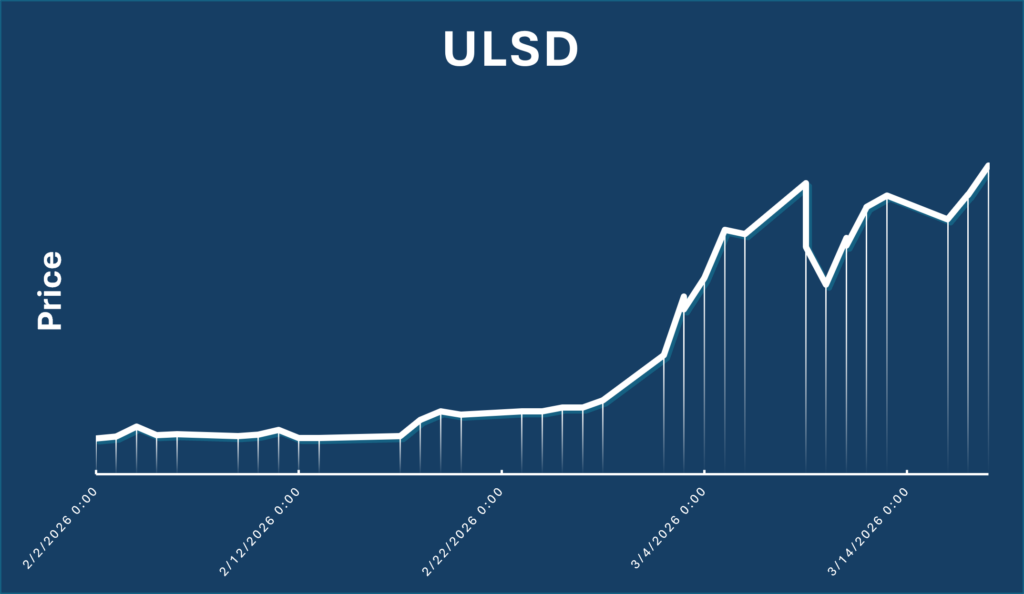
That is the essence of closed loop automation: a price change enters the system, flows through every operational touchpoint, and reaches customers, drivers, and sales teams automatically.
Communicating these intraday rack price fluctuations across the enterprise becomes imperative. Technology plays a central role in making that possible. Real-time data platforms provide continuous visibility into wholesale markets and supplier pricing.
With the right automation, as the rack price changes, systems can be updated, prices made available to the internal team and communicated to the petroleum marketers’ customers — all as part of a single, continuous loop.
Where Closed Loop Automation Creates Measurable Advantage
Customers
In less volatile times, we might send out a price notification to our customers once per day. However, with more frequent price fluctuations, it is necessary to notify our customers multiple times throughout the day. Closed loop automation ensures that these notifications are not dependent on manual steps or batch schedules, but instead flow automatically as soon as the price changes.
Drivers
Having access to rack pricing as it changes in real time, especially during wild price swings, can create gross profit opportunities. When pricing updates are part of a closed loop, drivers receive the information the moment it becomes available, reducing the risk of missed opportunities.
Salesmen
The ability to send out price notifications on-demand and automatically throughout the day can leverage the price volatility. Closed loop automation ensures that sales teams always have current pricing, without relying on manual re-entry or delayed communication.
Volatility Isn’t Going Away — But Manual Workflows Should
As geopolitical uncertainty continues to influence global energy markets, volatility is likely to remain a persistent feature of the pricing environment. In this landscape, technology adoption is no longer a competitive advantage but a baseline requirement. Petroleum marketers that invest in integrated data, analytics, and pricing systems will be better positioned to protect margins, respond to market shifts, and maintain competitiveness in an increasingly complex operating environment.
Every hour of delayed communication could result in a driver who missed an opportunity or a customer who simply went elsewhere. The marketers who thrive in this environment will be those who treat real-time pricing technology not as an IT project, but as a core business strategy. In a market where conditions can shift before lunch and reverse before close, speed and visibility are the new currency — and closed loop automation is what turns that visibility into coordinated action.
Five Ways to Assess Whether Your Technology Stack Supports Closed‑Loop Automation
- Audit your data latency — Find out exactly how old your rack pricing data is when it reaches your team. If the answer is “hours” or even “I’m not sure,” that’s your first problem to solve. You should know your data lag to the minute.
- Map your communication chain — Trace the full path a price update takes from the rack to your customer. Every manual step in that chain is a delay and a failure point. Document it, then ask which steps can be automated.
- Test your system under stress — Volatile days are exactly when your technology gets tested hardest. Run a simulation: what happens to your workflow when prices change four times before noon? If the answer involves people scrambling, your system isn’t ready.
- Evaluate your notification capabilities — Can you send price updates to customers and drivers on demand, in real time, segmented by customer type or product? If you’re limited to scheduled batch emails, you’re already behind.
- Check your integration points — Your pricing data should flow automatically into your ERP, your CRM, and your customer-facing channels. If someone is manually re-entering numbers anywhere in that process, you have both a speed problem and a data accuracy risk.
Closed loop automation ties all of these elements together. It ensures that once a price changes, the entire organization — and every customer-facing channel — moves with it.
Rooted in these principles and shaped by 30 years of our clients’ feedback, PriceWorks was designed to simplify the entire workflow of collecting prices from your suppliers and delivering adjusted pricing to your customers. Reach out to us for more information.