By Davis McCauley, Lead Brand Designer
For decades, foodservice in convenience stores and travel centers was viewed as an amenity, a secondary consideration behind fuel price, location, and speed. That hierarchy has fundamentally changed. Prepared food and dispensed beverages are now among the fastest-growing and highest-margin categories inside the store, often delivering margins two to three times higher than traditional grocery items.
As fuel growth flattens and competition intensifies, food and beverage have become primary drivers of traffic, loyalty, and brand relevance. Against that backdrop, more operators are asking whether it’s time to create a proprietary branded foodservice offering of their own.
The Customer Knowledge Advantage
For local and regional operators, the case for proprietary food begins with a powerful advantage national chains struggle to find: deep knowledge of the customer. Independent and regional brands know who shops their stores, when they visit, and what motivates their purchase decisions.
Research consistently shows that food quality and freshness are among the top reasons customers choose one convenience store over another, and trust plays an outsized role in those decisions. That trust, earned through daily interaction with a loyal customer base, is a powerful asset when introducing a food program designed specifically for the community you serve. This customer intimacy allows operators to design offerings that feel relevant rather than generic.
National QSR brands are built for scale and consistency, which limits their ability to adapt menus, portion sizes, or flavors to local tastes. Regional operators can move faster and think smaller, tailoring products to fit local preferences, cultural traditions, or workday routines. When a proprietary food item reflects the real habits and expectations of its audience, it becomes more than a menu option; it becomes part of the customer’s daily routine.
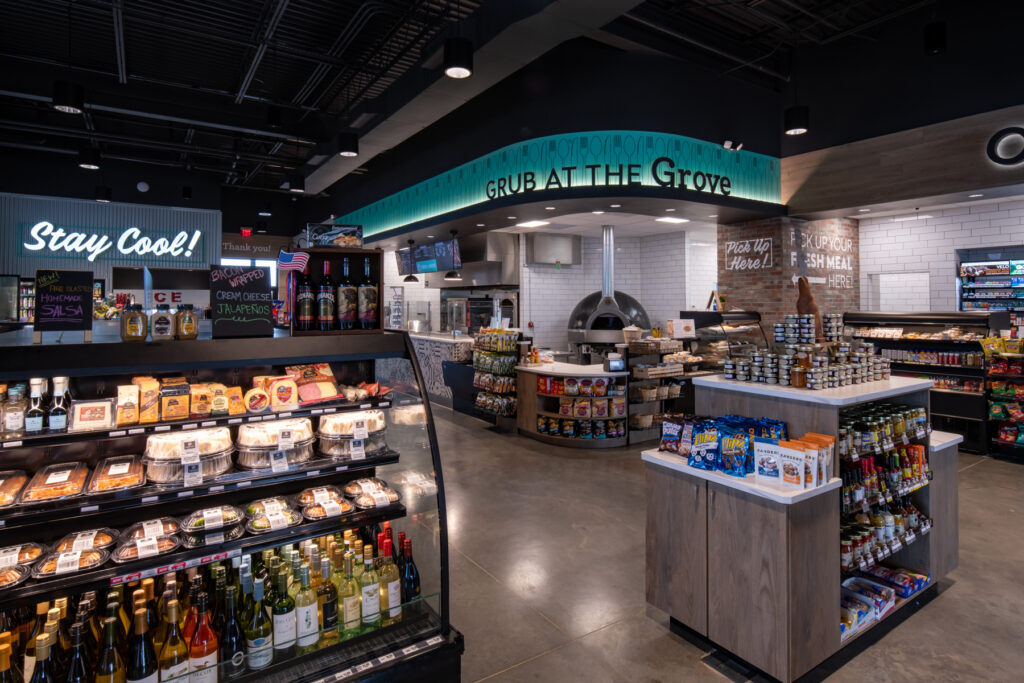
Oak Grove
The Hybrid Model Strategy
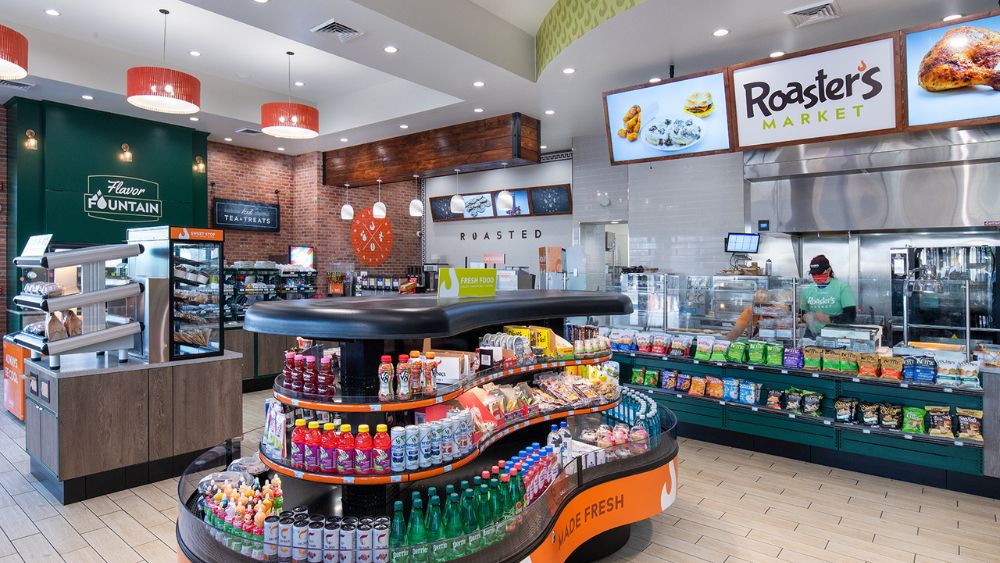
That said, building a proprietary food brand does not require abandoning national players. In many cases, the most effective approach is a hybrid one. Recognized chain brands can serve as powerful anchors, delivering instant credibility and traffic. Industry benchmarks often show double-digit lifts in foodservice transactions when a well-known QSR brand is introduced. But anchor brands inevitably leave gaps, whether in dayparts, menu breadth, price points, or regional relevance. A proprietary offering can be purpose-built to fill those gaps, capturing incremental occasions and keeping food dollars within the brand.
To maximize impact, food branding must be treated as a strategic extension of the store brand rather than a standalone project. Clear alignment between the parent brand and the food brand reinforces marketing efforts and elevates both. This alignment can take many forms, including:
- Adding a simple food-forward descriptor, such as “Kitchen” or “Eatery” to the parent brand
- Incorporating distinctive colors, typography, or packaging that signal high quality food & beverage
Research across retail and foodservice shows that strong, consistent branding can significantly increase trial and repeat purchase, particularly when customers associate the brand with food made specifically for them.
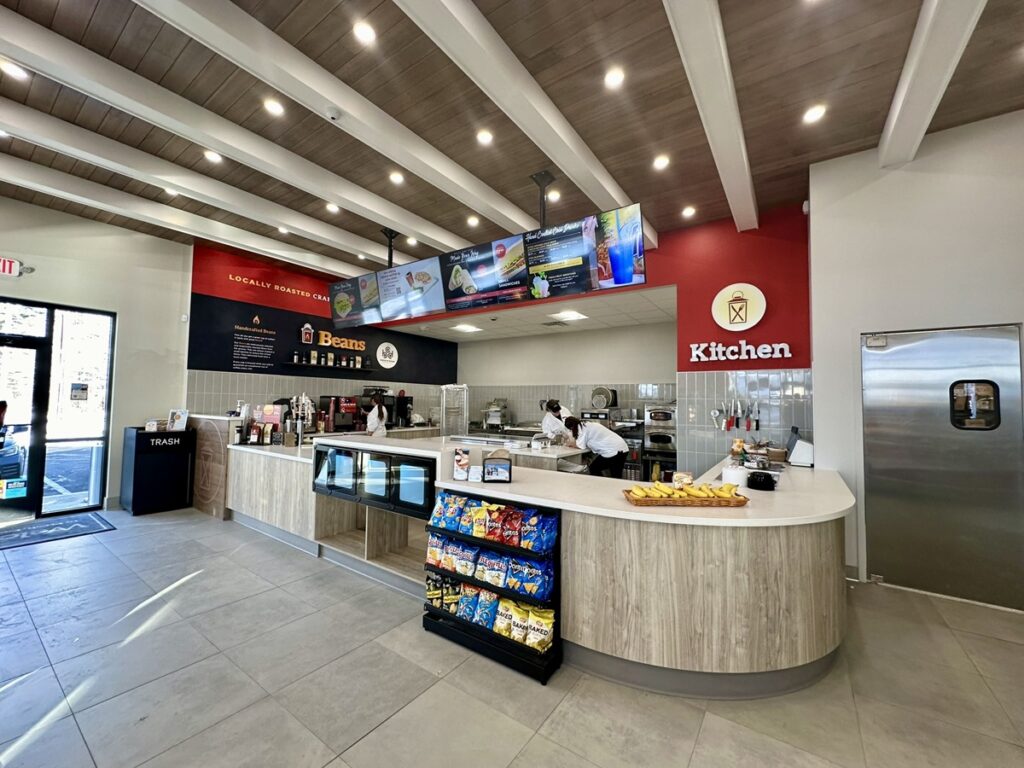
Rusty Lantern Market
When Food & Beverage Drive Brand Evolution
The urgency around food branding is heightened by broader shifts in the industry. As electric vehicles, improved fuel efficiency, and changing travel behaviors reshape the role of the forecourt, fuel-centric branding continues to lose relevance.
Many leading operators already report that food and beverage account for more than half of in-store gross profit, and that share is expected to grow. This raises an important strategic question: does your brand visually and emotionally compete in the food and beverage space, or does it still communicate a fuel-first mindset?
For some operators, a proprietary food offering can serve as the catalyst for a brand’s evolution, or even a broader redefinition of what the brand stands for. Along those lines, alignment between brand personality and food offering is critical. Not every concept fits every brand, and forcing a mismatch can create confusion and hurt appeal.
When an operator identifies a disconnect between the parent brand and a desired food experience, introducing a sub-brand can be an effective solution like RaceTrac’s Swirl World frozen yogurt offering. A distinct but connected food sub-brand allows operators to experiment, entertain, or indulge in ways the core brand may not be positioned to do, while still benefiting from existing trust and scale.
Building What Can’t Be Replicated
True differentiation, however, is found in the details. Proprietary food programs that succeed over the long-term offer something customers cannot easily find elsewhere. Larger or more satisfying portion sizes, locally sourced ingredients, regionally inspired recipes, or distinctive packaging can all create meaningful separation from competitors.
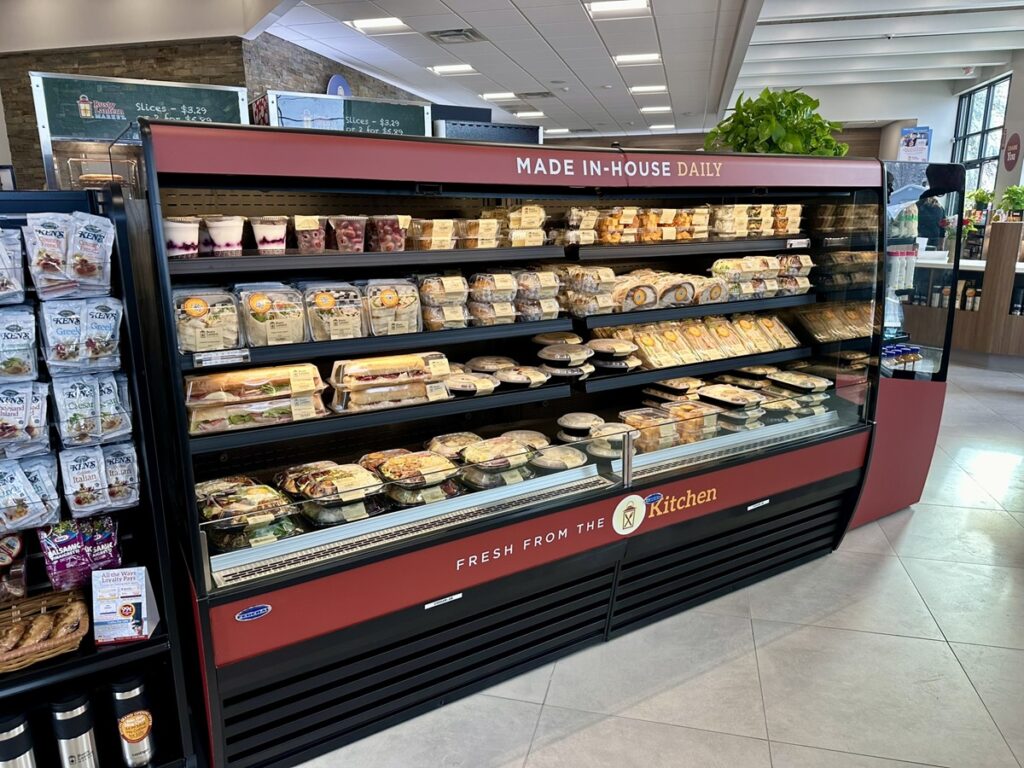
Rusty Lantern Market
Proprietary items rooted in local culture or nostalgia often outperform trend-driven offerings because they foster emotional connection and repeat purchase. Iconic examples across the industry like Wawa’s hoagies, Allsup’s fried burritos, or the 7/11 Big Gulp demonstrate that when a product becomes synonymous with the brand itself, it creates a competitive advantage that is difficult to replicate.
Ultimately, creating a proprietary branded foodservice offering is not a short-term play. It requires operational discipline, consistency, and a willingness to invest in brand-building over time. The right moment to build is when an operator clearly understands their customer, sees unmet needs in the market, and is prepared to support foodservice as a core growth strategy, not a side initiative.
In a crowded and rapidly evolving landscape, the operators who win will be those who lean into what makes them unique, aka their superpower. A well-executed proprietary food brand transforms that difference into a dining destination.