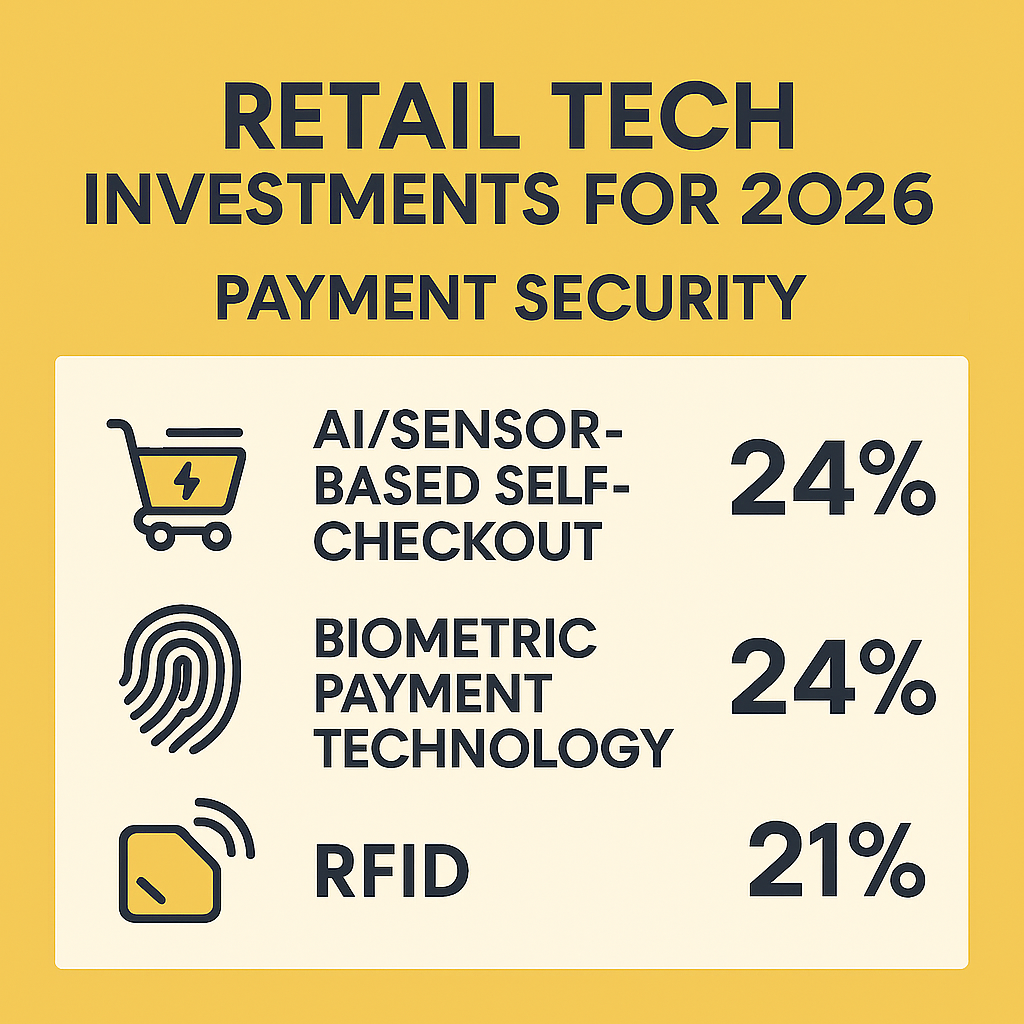
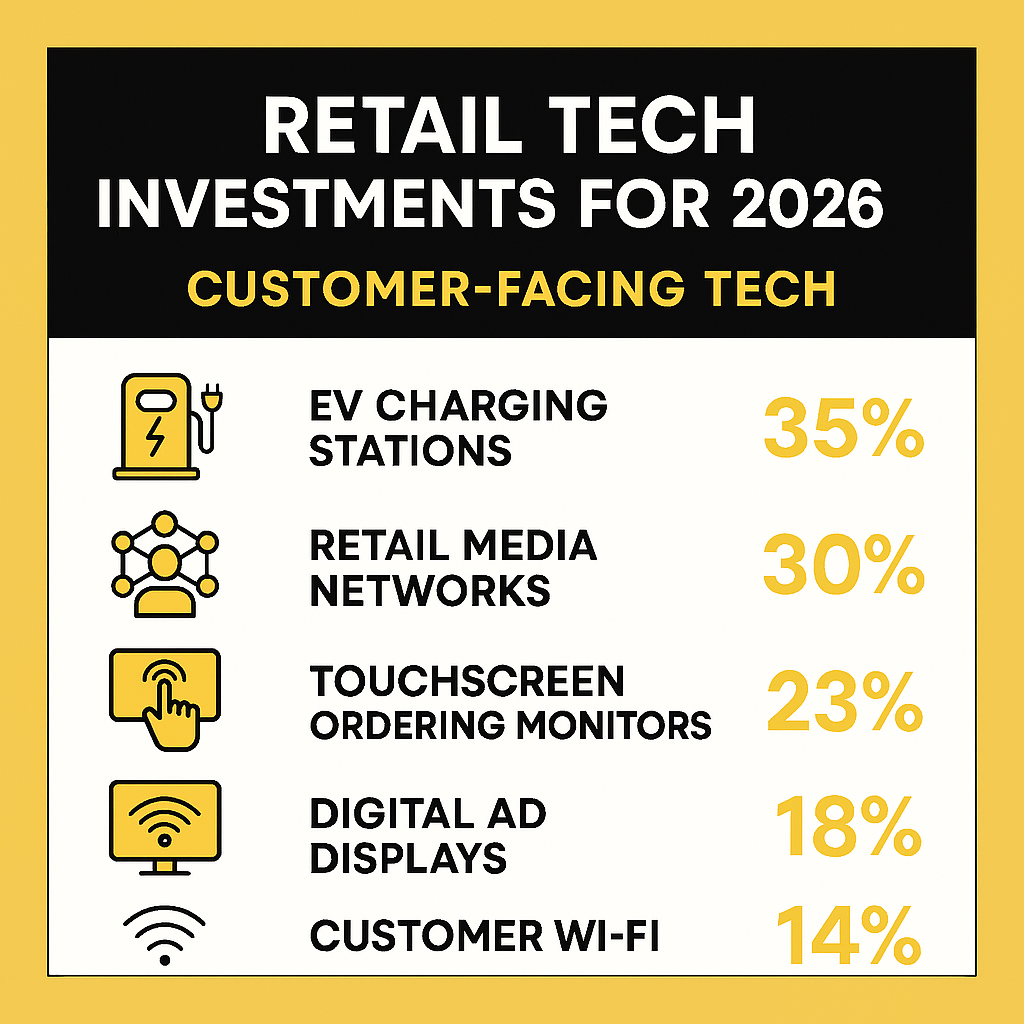
Retail technology is evolving at breakneck speed. According to the 2025 Convenience Store News Technology Study, retailers are prioritizing investments in electric vehicle (EV) charging stations (35%), retail media networks (30%), touchscreen ordering monitors (23%), and digital ad displays (18%). On the payment side, AI-driven self-checkout (24%), biometric authentication (24%), and RFID (21%) are gaining traction.
These innovations promise better customer experiences and operational efficiency, but they also introduce new challenges in bandwidth, latency, and security. To meet these demands, edge computing and artificial intelligence (AI) are emerging as critical components, allowing retailers to process data closer to the source and deliver real-time insights without compromising security.
The Retail Tech Landscape: A Bandwidth and Security Crunch
Retailers aren’t just selling fuel and snacks today, they’re becoming digital hubs. EV charging stations require constant connectivity for payment processing and charger monitoring. Retail media networks stream ads to in-store screens, while touchscreen ordering systems handle real-time menu updates and transactions. Customer Wi-Fi, cited by 14% of retailers as a planned addition, adds another layer of complexity.
Payment technologies amplify these challenges. AI-powered self-checkout systems rely on sensors to detect items and prevent fraud. Biometric payment methods process sensitive data that requires instant security. RFID tags enable faster inventory management but require powerful connectivity to sync with back-end systems.
All these technology components share a common dependency: high-speed, secure, and resilient connectivity. Traditional cloud-only architectures can struggle to keep up with these demands, especially in environments where milliseconds matter.
Why is Edge Computing Important?
Edge computing shifts data processing from centralized cloud servers and localizes it—often within the store itself. This approach reduces latency, minimizes bandwidth consumption, and enhances reliability. For retailers, this means:
- Real-Time Responsiveness: Digital signage can update promotions instantly based on inventory or time of day.
- Operational Continuity: If the internet connection drops, edge systems can keep self-checkout and payment services running.
- Enhanced Security: Sensitive data, such as biometric identifiers, can be processed locally, reducing exposure to external threats.
Take EV charging stations: edge-enabled systems can monitor charger health, predict maintenance needs, and process payments without relying on distant cloud servers. Similarly, AI-driven ordering kiosks can personalize menus based on local preferences without sending every data point to the cloud.
AI at the Edge: Smarter, Faster, Safer
AI enables intelligent decision-making where data is generated, amplifying the benefits of edge computing.
Why is AI important for retailers?
AI can allow retailers more control over their operations and help reduce costs. By analyzing data locally, at the store level, retailers avoid sending massive amounts of information to the cloud, which saves on bandwidth and storage fees. AI can also automate tasks such as inventory checks, freeing up staff and improving efficiency.
Use cases include:
- Predictive Maintenance: AI models running at the edge can analyze EV charger performance and flag issues before they cause downtime.
- Dynamic Pricing & Promotions: Retail media networks can use AI to adjust ad content in real time based on customer demographics or weather conditions.
- Fraud Detection: AI-powered self-checkout systems can identify anomalies—such as item misplacement or suspicious behavior—without waiting for cloud-based analysis.
By combining AI with edge computing, retailers can deliver personalized, secure, and efficient experiences while reducing reliance on centralized infrastructure.
Bandwidth & Security: Hidden Challenges
The surge in connected devices—from EV chargers to biometric scanners—can lead to a bandwidth bottleneck. Only ten years ago, most retail locations hosted ten connected devices; today, that number is closer to 30 and continues to grow! Streaming high-definition ads, processing real-time orders, and syncing loyalty programs all compete for network resources. Meanwhile, potential points of attack expand as more endpoints come online.
Security is especially critical for retailers because customers share financial and personally identifiable information (PII) every time they pay or use loyalty apps. A breach can damage trust and lead to costly fines.
Two key security concepts stand out:
- PCI DSS Compliance: This is a global standard for protecting payment card data. Retailers must meet these requirements to keep transactions secure and avoid penalties.
- Zero Trust Architecture: This approach assumes no device or user is automatically trusted. Every access request is verified, reducing the risk of breaches.
Edge computing supports these measures by:
- Localizing Data Processing: Reducing the amount of sensitive data transmitted over public networks.
- Supporting Zero-Trust Architectures: Enforcing strict identity verification at every node.
- Enabling Hybrid Models: Combining edge and cloud for scalability without sacrificing speed or security.
Best Practices for Retailers
To get the most from edge computing and AI, retailers should:
- Invest in Scalable Edge Infrastructure: Start with critical applications like payment systems and digital signage.
- Deploy AI Models Locally: Use lightweight models optimized for edge devices to deliver real-time insights.
- Adopt Zero-Trust Security: Protect every endpoint with encryption and continuous authentication.
- Plan for Hybrid Architectures: Balance edge processing with cloud analytics for long-term scalability.
Conclusion: Futureproofing Retail Networks
Edge computing and AI aren’t just jargon, they’re foundational pieces for the future of retail technology. As convenience stores evolve into connected ecosystems, these innovations will enable faster, smarter, and more secure experiences for customers.
Futureproofing matters. Retailers should ensure their networks and firewalls can handle the growing number of connected devices and security demands. Edge computing and AI make this possible by reducing cloud dependency, improving resilience, and enabling real-time decision-making at the store level.
Retailers that embrace this shift today will be better positioned to thrive in a world where digital convenience is the ultimate competitive advantage.