By John McCauley, Partner and Director of Brand Design, Paragon Solutions
Two independent data sets landed on the same day recently, and together they tell a story that every convenience retailer should be paying attention to. When separate research methodologies and separate sample pools arrive simultaneously and point in the same direction, it’s worth taking seriously.
Datassential’s Q1 2026 C-Store Quarterly Tracker reports that 51% of consumers feel c-store prices are higher than they were the prior month.
Meanwhile, the CSNews 2026 Business Forecast Study finds that while roughly 60% of retailers still anticipate sales growth this year, that figure is down 7 points year over year, and the share expecting a decline jumped 10 points. Profit growth expectations are softer still.
So, operators are spending more, charging more, and watching customers pull back. Inflation and economic concerns rank as the top issue for c-store retailers for the second consecutive year. That’s a squeeze, and it’s industrywide.
Here’s the thing, though: the operators who understand that this is as much a perception problem as a pricing problem are the ones who will come out on the other side with stronger businesses. And the lever they have available, one that’s often underestimated and underutilized, is design.
Value Is Not the Same Thing as Price
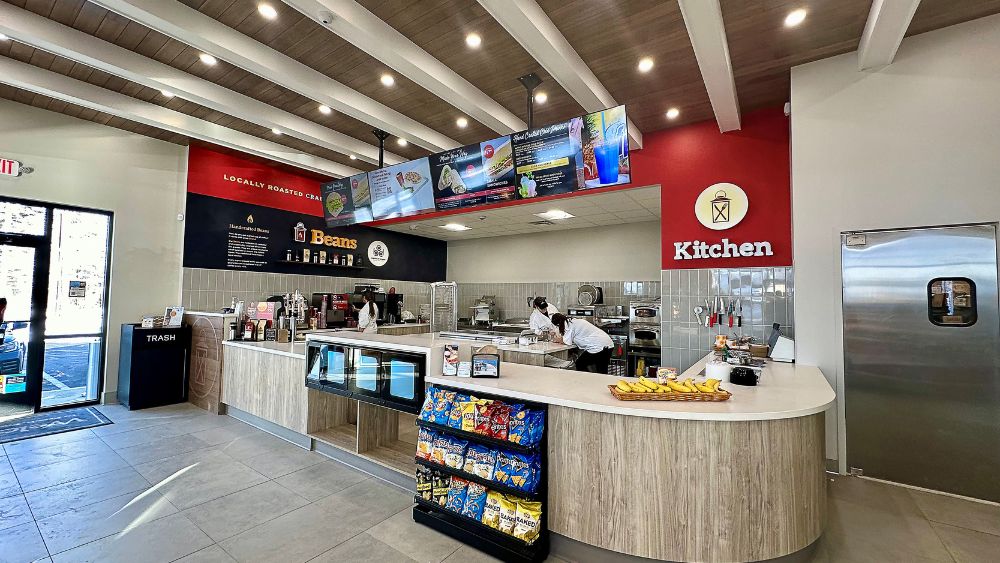
Let’s be clear about what we mean when we talk about value perception. Value isn’t the number on the price tag. Value is the gap between what something costs and what the experience feels worth. That gap lives almost entirely in the environment, the brand, and the signals your store sends from the moment a customer pulls into the lot.
Consider two c-stores selling the same cup of coffee for the same price. One has a clearly branded, well-lit beverage station with an inviting name, good merchandising, and a clean, coherent aesthetic. The other has a bank of urns next to a condiment station that’s seen better days. Same coffee. Same price. Very different perceived value. One feels like a deal. The other feels like an overcharge. That’s design doing real economic work, or failing to.
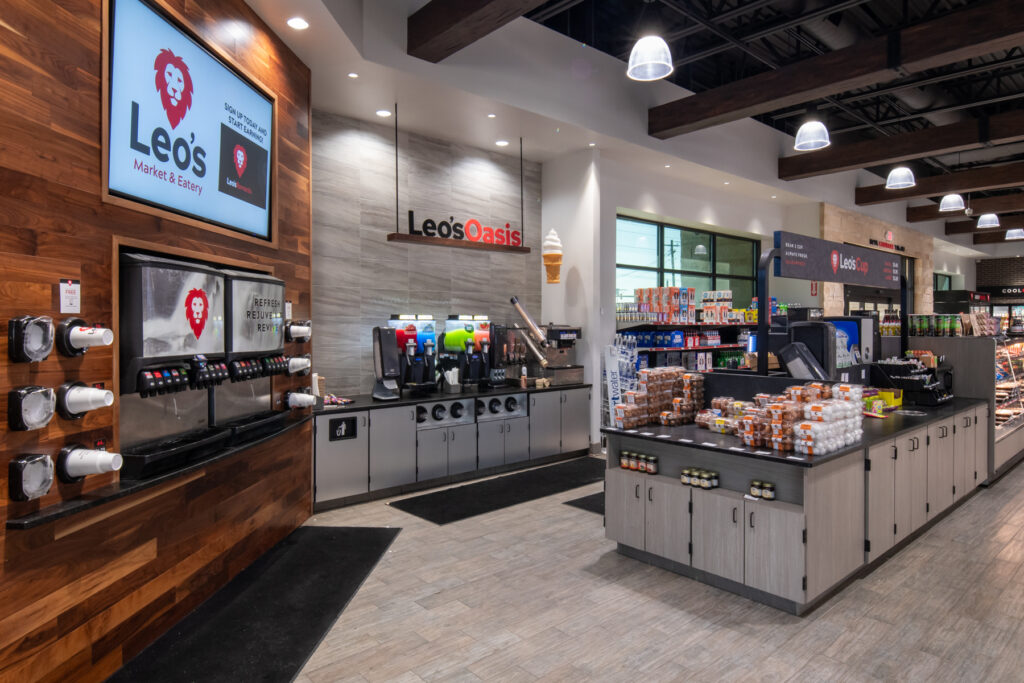
This matters more right now than it has in years. When people feel financially squeezed, they get more deliberate about where they spend and why. The stores that can justify their prices through a better experience will hold traffic and basket size. The ones that can’t justify prices will feel the data playing out in real time.
The Destination Effect
One of the most consistent things we see in retail design is what we call the destination effect. A well-designed, clearly branded category gives customers a reason to choose your store rather than defaulting to habit or proximity. It turns a transaction into a preference.
The instinct is right. But as we talked through it, the same issue came up that always comes up: the focus tends to land on a single element rather than the full experience.
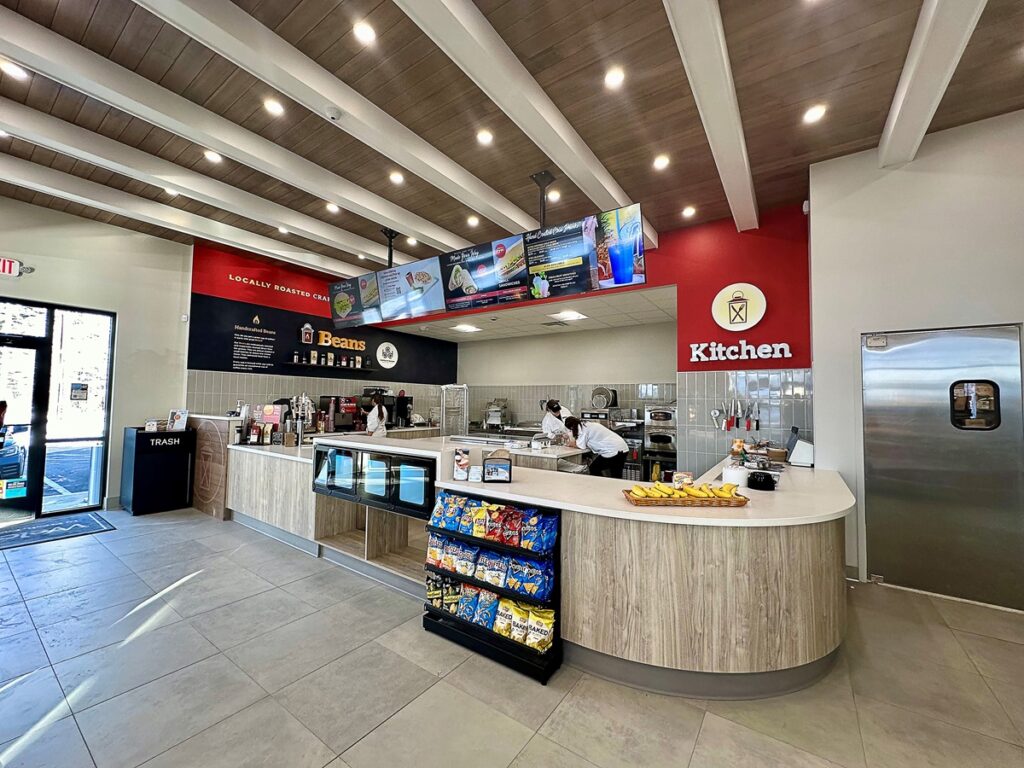
Coffee is a perfect category to examine here because the stakes are high and the gap between operators is so visible. When you walk up to a coffee station, everything around you is communicating something. The equipment, the finishes, the lighting, the graphics, the branding, the way the station is maintained – all of it is either building a case for why this coffee is worth your money or quietly undermining it. A premium bean in a tired environment with generic signage still feels like a gas station cup. A well-designed station with a clear brand story and good lighting tells the customer something different: we thought about this, we care about this, this cup is worth it.
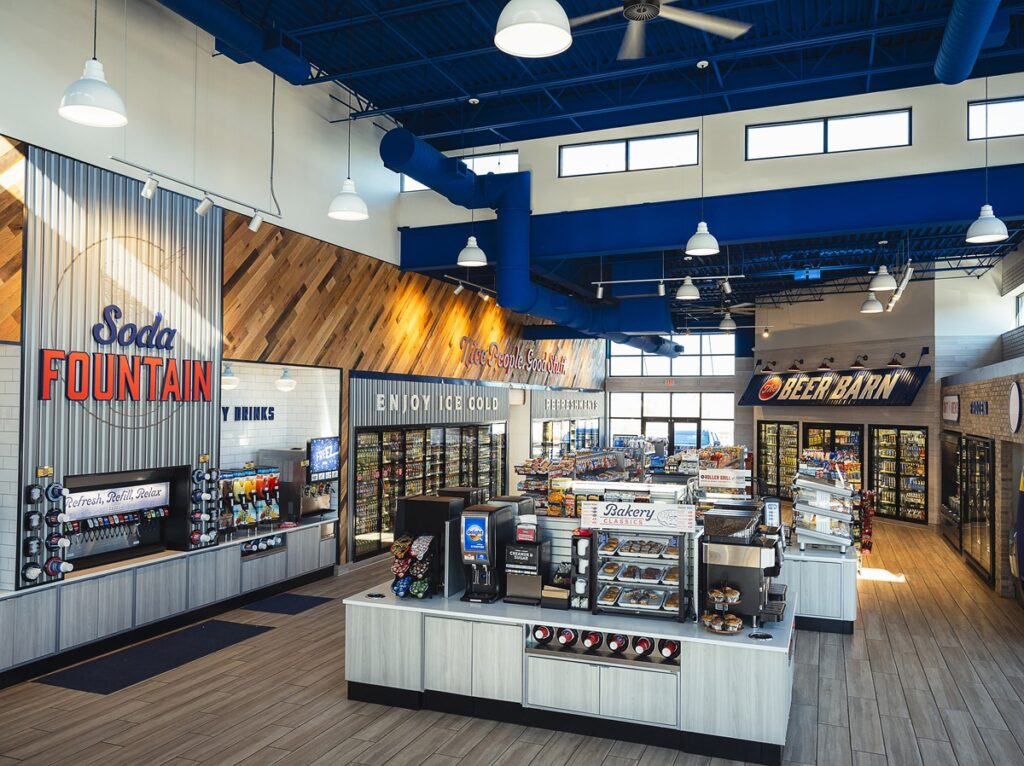
That story has to be told explicitly, not just implied. Why is this coffee better than what your competitor is pouring? The answer might be the beans, the equipment, the sourcing, or a local roasting partnership. Whatever it is, strategic branding and in-store marketing need to make that case clearly. And there’s a market knowledge component that can’t be skipped: not every trade area will support a premium price point. Knowing your customer and designing an experience calibrated to what they actually want is just as important as the design itself.
The broader data backs this up. The CSNews Forecast Study ranks prepared food as the top anticipated growth category for 2026, with 64% of retailers expecting a sales increase, and dispensed beverages third for unit volume growth. The industry has placed its bet on foodservice as the differentiator. The question is whether the environment around it reflects the investment going in.
What the Environment Communicates
Beyond specific category buildouts, the overall store environment sends constant signals that shape customer behavior in ways that are rarely visible but consistently measurable.
Lighting, materials, signage hierarchy, color, and spatial flow all work together to tell customers what kind of place this is and how much they should trust it. A store that feels thoughtfully designed communicates competence and care, making customers more willing to assume the food is fresh and the experience is worth repeating. Signage is a particularly underleveraged tool here. Most stores have a lot of signage and very little communication. There’s a meaningful difference between a wall covered in vendor-supplied POP material and a store with a clear visual hierarchy that guides the customer through the space and reinforces the brand throughout. The former creates visual noise. The latter creates a shopping experience.
The Argument for Investing Now
The instinct in a tight environment is to cut discretionary spending, and brand and design investment often looks discretionary on a spreadsheet. That’s an understandable instinct and usually the wrong call.
Consider the competitive threat picture. The CSNews study finds that c-store operators now rank dollar stores as their biggest competitive threat for 2026. Dollar stores compete on price and convenience. If a c-store tries to win on those same terms, it’s playing on the wrong field. The way to beat a dollar store is not to be cheaper. It’s to be better. And better is built through experience, environment, and brand.
When nearly half of operators are bracing for lower traffic, most will respond by cutting costs and waiting for the cycle to turn. A smaller group will recognize this as the moment to differentiate. When the broader market is in maintenance mode, the contrast is sharper and the investment required to stand out is lower. The operators who build stronger brand environments now will establish preference before the competitive environment heats back up.
A Practical Starting Point
None of this requires a full remodel to get started. Pick one high-visibility category and ask whether the environment around it reflects the quality of the product inside it. If the answer is no, that’s the gap where design can do its best work. Then look at the exterior and ask what story it tells to someone driving past for the first time.
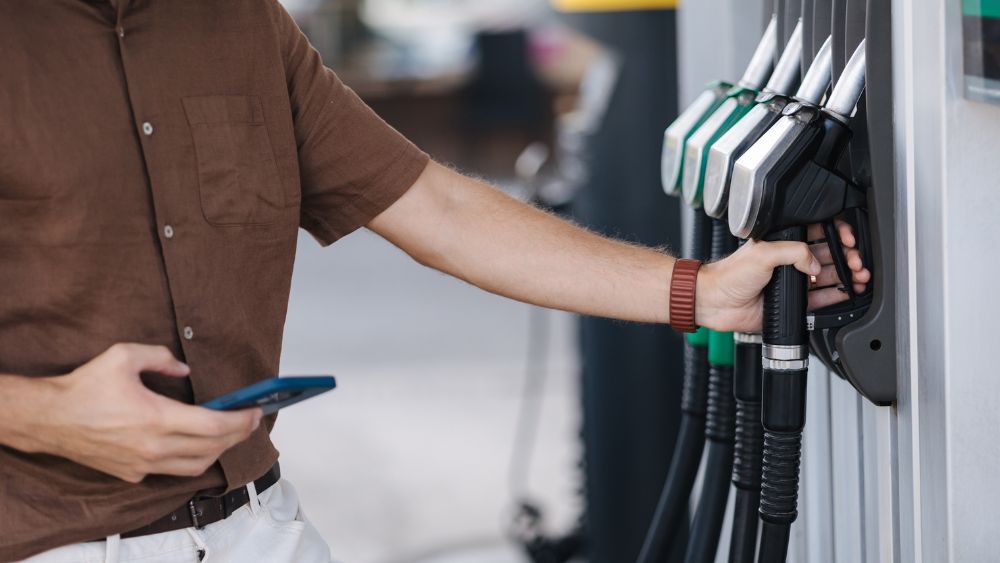
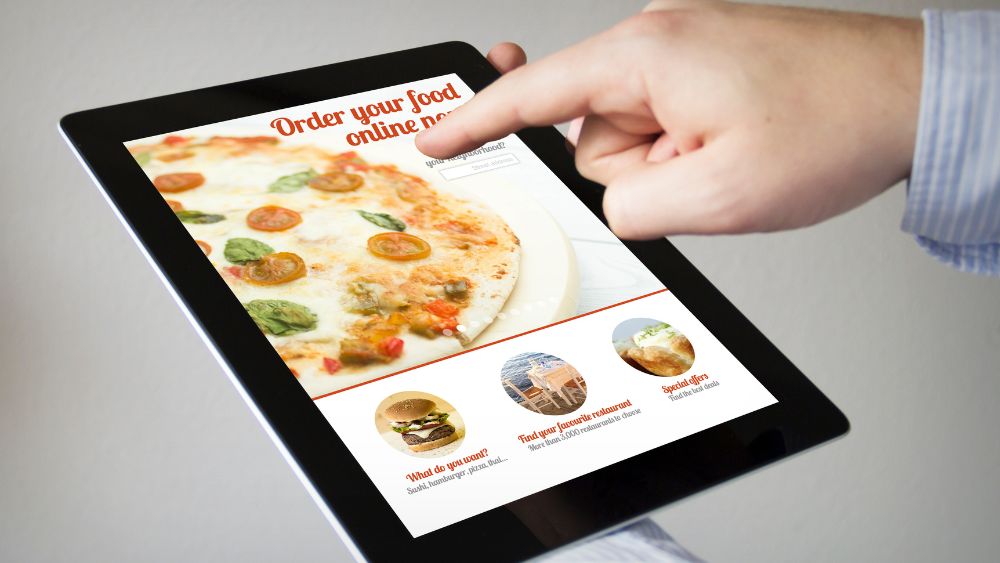
It’s also worth noting that the physical environment doesn’t operate in isolation. The CSNews study identifies mobile app ordering and at-pump ordering as the top tech-enabled services operators plan to add in 2026. Those digital touchpoints are extensions of the brand experience and need to tell a consistent story with what’s happening inside the store.
The data tells us consumers are watching their spending more carefully. But they’re still showing up: 22% visited a c-store in person last month for a meal. They’re coming in. The question is whether your store gives them a reason to come back.
That’s the design challenge. And it’s worth taking seriously.