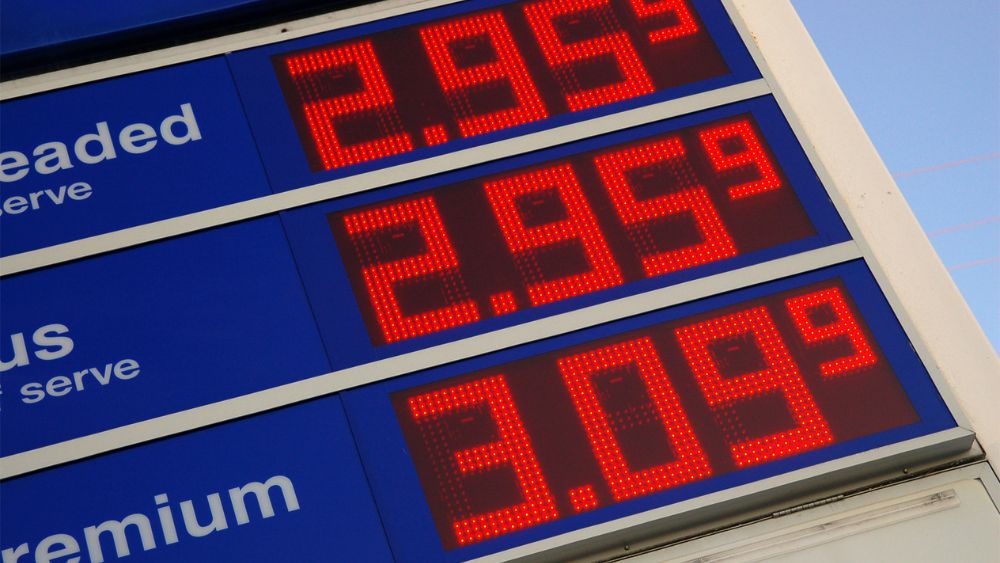
For decades, fuel retail has operated on a simple competitive lever: lower the sign price and wait for volume to follow. But today’s market conditions are exposing the limits of that strategy.
Fuel margins are healthy, but with constant price volatility, the landscape can change in an instant. Where you’d expect to see daily price changes of two or three cents a few decades ago, we now see swings of 10 cents or more. Every pricing decision comes with more risk than ever.
On top of that, consumers are increasingly digital, mobile, and responsive to personalized incentives. In this environment, competing purely on price is becoming both more expensive and less effective.
Why price wars are losing power
Blanket price cuts impact every gallon sold — including gallons that would have been purchased anyway. That means retailers often sacrifice margin without truly influencing incremental behavior.
Just how inefficient can lowering the sign price be? We compared the difference in effectiveness between a one-cent personalized promotion and a one-cent sign price adjustment. The personalized promotion was 4.5x more effective at influencing customer behavior — demonstrating how blunt price reductions often subsidize existing demand rather than create new volume.
At the same time, fuel demand per site is under pressure, with data showing a 2% decline in fuel volume sold per station over the past year. Vehicles are becoming more efficient, electric adoption is growing, and traffic patterns continue to shift. Simply lowering prices does not solve structural demand challenges.
Sign price adjustments do still have a place in the retailer’s toolbox, though. In highly competitive markets, low prices are essential to maintain traffic. But pricing discipline is essential — there’s a difference between using price tactically to stay competitive and relying on across-the-board cuts as a primary growth strategy. There’s little long-term value in dropping your sign price below the marketplace. When competitors respond with their own price drops, the race to the bottom begins, leaving little room for sustainable differentiation.
When every gallon is discounted to chase volume, margin erodes fast, especially in today’s volatile environment. Retailers need a smarter way to influence behavior that protects sign integrity while selectively investing in the customers most likely to shift trips or increase spend.
The rise of personalization
Personalized strategies focus on influencing specific customers rather than the entire market. Instead of lowering the price for everyone, targeted promotions reward the shoppers who are most likely to shift trips, increase frequency, or consolidate spend.
Precise, personalized incentives are designed to drive incremental gallons, not subsidize existing demand. By identifying which consumers are uncommitted, lapsed, or splitting trips across competitors, retailers can allocate promotional dollars more efficiently.
This approach turns fuel promotions from a defensive tactic into a growth lever.
Why it works
Digital engagement has fundamentally changed how consumers respond to incentives. When offers are personalized and delivered through mobile platforms, they feel relevant rather than generic. Retailers can measure performance at the customer level, refine targeting over time, and optimize spend toward the highest-return segments.
Instead of asking how low the sign price can go, precision strategies ask: Which customer behavior needs to change, and what incentive will move it? That shift maximizes the profitability of each transaction.
Key takeaways for fuel retail
Replace blanket price cuts with targeted incentives
Personalized promotions influence behavior more effectively than across-the-board sign price reductions. Redirecting spend toward specific customer segments helps drive incremental trips while avoiding margin erosion on existing volume.
Protect profitability by focusing on incremental growth
Every cent off the sign price impacts all gallons sold. Precision strategies allow retailers to reward only the shoppers who need motivation, helping generate new volume without sacrificing margin unnecessarily.
Use data to win the uncommitted customer
Not all customers are equally loyal — or equally responsive. Advanced analytics make it possible to identify high-potential segments, predict responsiveness, and continuously optimize promotional strategy for stronger ROI.
Precision over price wars
Fuel retail is evolving. Competing on price alone is no longer a durable strategy in a volatile and margin-sensitive environment. Retailers that shift from price wars to precision — using data, personalization, and targeted incentives — are better positioned to drive incremental demand, protect margins, and build long-term competitive advantage.