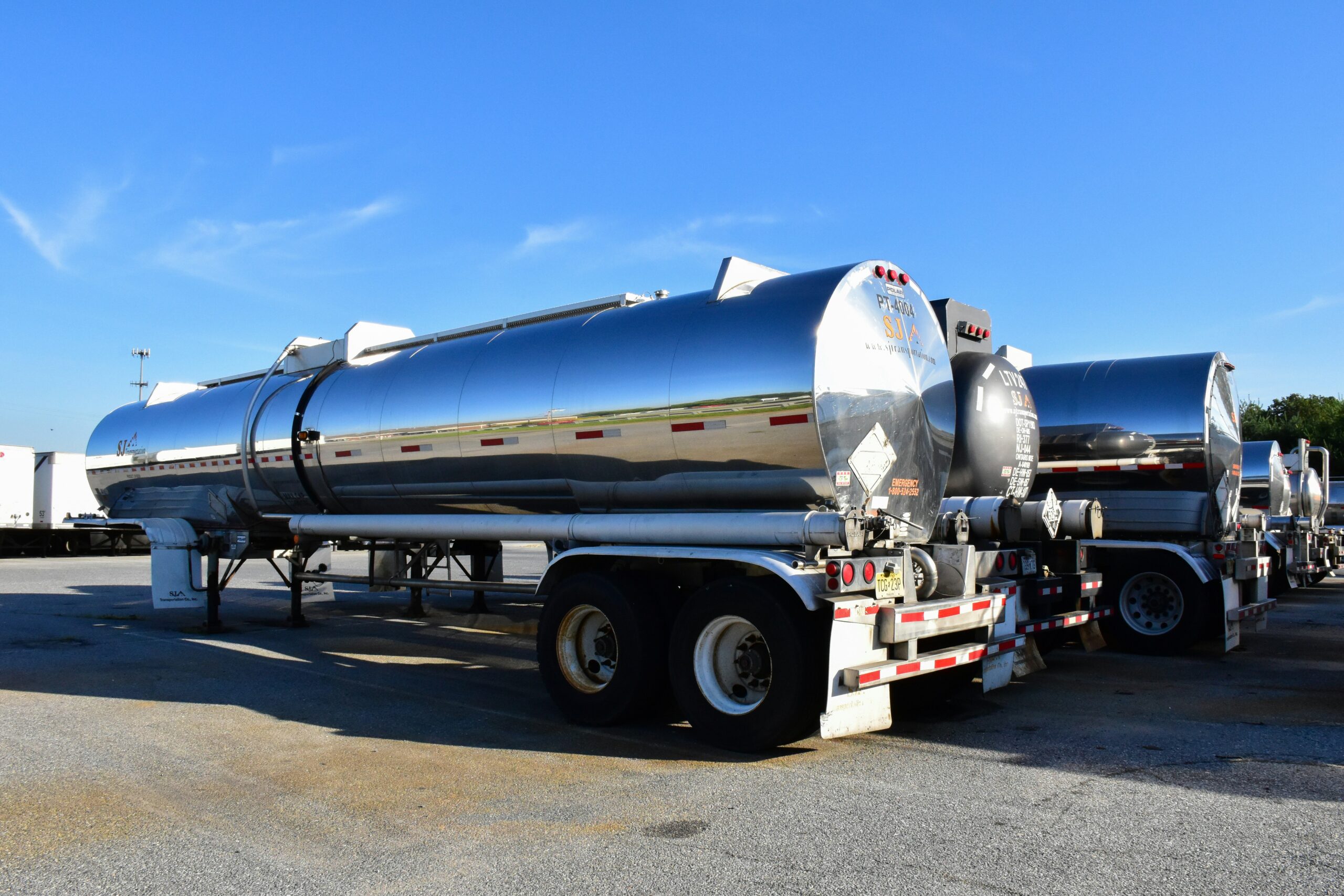
A paid-off tanker can still be one of the most expensive trucks in your fleet once you add up downtime, repairs, and missed deliveries. Here’s how to calculate a tanker’s real total cost of ownership and decide whether to keep it, rebuild it, or replace it.
What you’ll learn
- The complications that occur when evaluating age and mileage for your cycling strategy
- A practical tanker total cost of ownership (TCO) formula, plus the double-counting traps to avoid
- How to put a dollar figure on downtime, one of the most underestimated costs in any tanker fleet
- When to retain, rebuild or remount, or replace a tanker
- How to build a one-unit business case and a multi-year tanker fleet replacement plan
Picture two tankers in the same fleet. Same chassis, same model year, same tank, same outfit. They run similar routes and log similar miles. On paper, they’re twins.
So why does one cost 13% more to run than the other?
It’s the kind of question Broc McGuire, a Business Development Manager at Mike Albert Fleet Solutions, often works through with oil and gas clients. It’s also why he won’t hand anyone a magic replacement number for a tanker, be it a tractor that tows a tanker trailer or a straight truck/chassis with a tanker added, which is the focus of this article.
“There’s not a set number of years or an odometer threshold that applies to when best to replace every tanker, because they can be utilized for different jobs across the industry,” McGuire says. “There are simply too many variables, from acquisition and fuel costs to maintenance and other operational costs.”
So, When Should You Replace a Tanker Truck?
In short, plan to replace a tanker when the projected cost of keeping it (repairs, downtime, fuel, compliance work, and its shrinking resale value) is higher than the projected cost of replacing it over the same period. The key is looking at each unit’s specific cost data.
That’s different from the exercise most fleets run on their light-duty vehicles. “On a half-ton truck, I can tell you five to six years, 100,000-ish miles, and you need to get out of it,” McGuire says. “It’s completely different on this type of vehicle.”
A few reasons why tanker fleets play by different rules:
- The stakes are higher. “If you’re talking about the truck and the trailer with the tanker, depending on whether it’s a day cab or a sleeper, the cost could range from just shy of $200,000 for the chassis to over $500,000 with the straight truck that has a tanker added to it,” McGuire says. “They’re very, very capital-intensive.”
- The tank and chassis age differently. A tank’s condition, inspection history, and test schedule run on their own track, separate from the engine and drivetrain underneath it. Tankers added to a straight truck/chassis can often be moved from one to another, and potentially a third, depending on cycling timeframes. Your service partner or fleet management company should be able to maintain the service schedule for the straight truck/chassis differently than the tanker mounted to it.
- Duty cycles vary wildly. Product mix, terrain, loading and unloading cycles, stop frequency, and idle time all shape how fast a unit wears.
- Requirements shift. Terminals, customers, insurers, and regulators can all change what a unit needs to stay in service.
Look Beyond Age and Mileage
Mileage is a useful starting point, but it only tells part of the story. Two tankers with nearly identical odometer readings can have very different cost profiles. One spends its days on the highway. The other makes a dozen stops, idles at job sites, and works its brakes and pumping equipment hard all shift.
So, McGuire pushes clients to compare units that should look alike.
“If truck one and truck two are doing the exact same thing, relatively the same mileage pattern, same truck, same outfit, same tanker, why is truck one costing 13% more to operate than truck two?” he says. “There are a lot of those one-off scenarios. We didn’t plan to replace truck one this year, but because of those unforeseen variables, my recommendation might be, let’s replace it now and get you out of the downtime and maintenance loop you find yourself in.”
To spot those outliers, track more than miles. The most useful indicators include:
- Engine and idle hours
- Fuel consumption per mile and per engine hour
- Repair frequency and repair cost
- Days out of service
- Cost per mile and cost per operating hour
- Cost per delivery, route, or stop, if your systems can capture it
Engine hours deserve special attention in oil and gas work. A tanker that spends long stretches idling or running a pump can rack up heavy wear without adding much to the odometer.
How Do You Calculate Tanker Total Cost of Ownership?
Tanker total cost of ownership is every cost tied to acquiring, operating, maintaining, and eventually disposing of a tanker. A simple framework looks like this:
Tanker TCO = acquisition cost + financing cost + fuel + maintenance and repair + downtime + insurance, registration, and compliance costs − residual value
You can calculate it per year, per mile, per engine hour, per delivery, or per operating day. Pick whichever matches how your business measures performance, then stick with it.
A few ground rules keep the math honest:
- Count each cost once. If towing and emergency repairs sit in your maintenance line, leave them out of your downtime line.
- Choose one method. Don’t add both the purchase price and the principal portion of your loan payments, or both depreciation and “acquisition minus residual” for the same truck.
- Treat a paid-off tanker’s purchase price as a sunk cost. When you’re deciding whether to keep a unit, what matters is its current market value and the costs ahead of it, not what you paid years ago. (Remember, book value and market value aren’t the same thing.)
- Get finance and operations on the same page. They often define these inputs differently. Agree on the assumptions before you compare scenarios.
For context, the American Transportation Research Institute (ATRI) found that the average cost to operate a truck hit $2.336 per mile in 2025, the highest in the history of its annual report. ATRI’s data covers a broad mix of carriers, so treat it as a backdrop rather than a benchmark for your own fleet. Still, one detail from the same report stands out for this audience: tank carriers averaged an operating margin of just 4.0%. On margins that thin, a few units quietly running hot can eat a meaningful share of profit.
Mike Albert’s guide to commercial vehicle total cost of ownership covers the broader principles. Here’s how each piece applies to a tanker fleet.
Acquisition and Financing Costs
Start with the full upfront investment: chassis, tank, pumps and meters, other upfits, delivery and setup, and any financing or lease expense. A newer, more valuable unit can also change your insurance cost.
Keep in mind that a monthly payment isn’t a TCO calculation. A low payment on the wrong spec can cost more over its life than a higher payment on the right one.
Pricing is moving, too. A compliant engine under the Environmental Protection Agency’s (EPA) 2027 heavy-duty nitrogen oxides (NOx) standards could add $10,000 to $15,000 to vehicle costs, according to FleetOwner. The rule remains on schedule for January 2027, though the EPA has proposed amendments that aren’t final yet. It’s worth weighing in your timing alongside everything else in this analysis.
Fuel Costs
Fuel use can creep up as a unit ages, idles more, or needs more maintenance attention. It also swings with route design, payload, tire condition, engine and emissions-system health, and driver behavior.
Of course, the vehicle you specify directly affects fuel economy, and that goes beyond the engine’s specs. The exhaust, aftertreatment, transmission, and rear-axle gearing ratios can also affect your fuel costs. The right partner can build the right specification to help you maximize fuel economy while maintaining the power your wheel-ends need based on your tanker load, routes, topography, and more.
Right now, fuel efficiency gaps between units cost more than usual. The national average on-highway diesel price was $6.179 per gallon for the week of Oct. 12, 2026, up $2.51 from a year earlier, according to the U.S. Energy Information Administration (EIA). The agency’s October outlook assumes oil flows from the Middle East will remain constrained through the fourth quarter.
Review fuel cost per mile, per engine hour, and per delivery in addition to total gallons, since outliers tend to hide in the averages.
Maintenance and Repair Costs
Separate routine preventive maintenance from reactive repairs. Then track, by unit:
- Parts and labor
- Roadside repairs and towing
- Rental or substitute-unit costs
- Repeat repairs on the same system
- Shop time and third-party service expense
A single big repair rarely justifies replacing a tanker on its own. Watch instead for a pattern of rising, recurring, or unpredictable repairs.
Expect upward pressure across the board. ATRI found repair and maintenance costs rose 8.6% in 2025 to an average of $0.22 per mile, and the organization expects them to keep rising at elevated rates, citing tariffs on parts and metals.
McGuire has seen how quickly the cost picture can flip. “We saw through COVID the huge increase in the cost of maintenance in general, but also the cost of acquisition,” he says. “It was kind of offset by resale. Those are all things we pay attention to: current market trends and what’s going on, as well as what the data is telling us.”
Downtime Costs
Downtime is the cost most fleets underestimate, and for tankers it’s often one of the biggest.
“For a large portion of these fleets, it’s multiple thousands of dollars a day if a truck’s non-operational,” McGuire says. “That’s a big part of the TCO analysis.”
A practical way to estimate it:
Downtime cost = lost contribution margin + added driver and labor cost + substitute vehicle cost + towing and emergency repair cost + administrative disruption cost
Use your own operating data here, not industry averages. And as noted above, if towing already lives in your maintenance numbers, don’t count it again.
Here’s a simple illustration (the numbers are hypothetical). Say an older tanker is down 12 more days a year than a newer unit on the same routes, and each of those days costs $3,000 in lost margin, overtime, and rerouting. That’s $36,000 a year before anyone opens the repair invoice.
Insurance, Registration, and Compliance Costs
An older tanker can absolutely be compliant. It may just take more time, documentation, inspections, and repair work to keep it that way.
Cargo tanks carry their own testing and inspection schedule under federal hazardous materials rules. For many common fuel tanks, that includes annual external visual inspections and leakage tests, with internal visual inspections and pressure tests on a longer cycle. Intervals vary by tank specification and service, so confirm yours with a qualified cargo tank facility. Either way, a tank that’s overdue for a required test can’t be filled and offered for transport until the test is complete, which turns a paperwork miss into a missed delivery.
McGuire also points to the liability side. “Compliance plays into a lot more than the operational cost and efficiency of the truck,” he says. “If one of these trucks isn’t compliant and something happens, you’ve got a completely different issue on your hands.”
Residual and Disposal Value
Resale value can tip a close decision. A tanker sold while it’s still in good shape and in demand returns more than one that limps to auction after a major failure.
The used heavy truck market has been relatively firm. J.D. Power Valuation Services reported in August 2026 that auction prices for three- to six-year-old sleeper tractors were up 11.9% year over year and that average depreciation in recent months had been negligible. The same report expects more trade-ins as new truck deliveries pick up, which could put downward pressure on used values. Knowing where your units sit in that market, before they need to go, gives you room to time the sale.
How Downtime Changes the Replacement Equation
A broken-down tanker can stop revenue cold, and oil and gas operators feel that more than most.
“Oil and gas is unique in that it’s really elevated right now,” McGuire says. “Everything with them seems to be ‘I need it yesterday.’ If they’re missing deliveries, it’s hurting bad. It’s a more critical hit to the bottom line than somebody with a half-ton truck down who’s in a rental for a few days, because it’s not like you can easily swap these vehicles.”
Outside capacity isn’t always easy to find, either. In the third quarter of 2026, lead times for bulk freight capacity stretched from 24 to 72 hours to seven to 10 days, according to Uber Freight data reported by Trucking Dive.
The obvious fix, keeping spare units on standby, comes with its own price tag. “You don’t want a bunch of spare trucks sitting around doing nothing just in case one breaks down, because there’s a cost to that as well,” McGuire says. “That’s where life cycle analysis and replacement timing become hypercritical.”
For your TCO model, that means a tanker with manageable annual repair costs can still be one of your most expensive units if its breakdowns keep interrupting deliveries.
Retain, Rebuild, or Replace?
Every candidate unit has more than two options. Here’s how to think through the three main paths.
Retain When Costs and Reliability Remain Stable
Keeping a tanker makes sense when:
- Maintenance costs stay predictable
- Downtime is limited and manageable
- The unit still meets operating, customer, and terminal requirements
- The tank and chassis remain serviceable
- Holding the unit longer won’t materially erode its resale value
One caution: keeping a unit should be an active decision backed by data, even when the truck is paid off.
Rebuild or Remount When the Asset Still Has Value
Sometimes the chassis is the problem, and the tank isn’t. A well-maintained tank can outlast the truck it’s mounted on, which opens the door to rebuilding select systems or remounting the tank on a new chassis.
That path may fit when:
- The tank is in sound condition with complete documentation
- The chassis or a few specific systems drive most of the cost and downtime
- The rebuild or remount pencils out better than a full replacement
- You can live with the downtime during the transition
This route depends heavily on technical feasibility, chassis compatibility, cost, scheduling, and regulatory requirements. Remounts and repairs to a specification cargo tank have to be handled by a facility registered with the Federal Motor Carrier Safety Administration (FMCSA), and the agency maintains cargo tank registration resources to help you find one. Also note that a tank out of hazardous materials service for a year or more generally needs a pressure test before it returns. Bring in qualified tank, maintenance, and compliance professionals before you commit.
Replace When Costs, Risk, or Operational Limits Rise
Replacement usually makes sense when:
- Repair and downtime costs keep climbing
- The unit is unreliable during your busiest periods
- You’ve outgrown its capacity, compartment configuration, or pumping capability
- Customer, terminal, or safety requirements have moved past it
- The projected cost of keeping it exceeds the projected cost of replacing it
- Selling now protects resale value you’d lose by waiting
When you do replace, don’t just reorder the outgoing unit. Spec the next one for the job it needs to do over the next several years, including routes, product mix, safety technology, and driver expectations.
Lastly, keep in mind that delivery time for a straight truck plus a tanker is considerably longer than for light-duty half-ton, three-quarter-ton, or one-ton pickups.
How Do You Build a Tanker Replacement Business Case?
Evaluate each candidate tanker on its own. Fleet averages can hide the one unit that’s quietly costing you a fortune.
A solid one-unit business case compares three things over the same time horizon (three, four, or five years are common choices):
- The current tanker’s profile: age, mileage, engine hours, duty cycle, chassis and tank condition, repair history, downtime events, fuel and idle patterns, and current market value.
- The retain scenario: expected maintenance, downtime, fuel, compliance, and inspection costs, plus expected resale value at the end of the period.
- The replacement scenario: vehicle, tank, upfit, and delivery costs, financing or lease expense, the new unit’s expected operating profile, its projected residual value, and a plan for covering capacity during the changeover.
Write down your assumptions. If diesel prices, interest rates, or used values shift, you can update the inputs without rebuilding the analysis from scratch.
And let the data have the final word, even over your own plan. “That’s why the data we’re collecting through telematics, fuel programs, and other means shapes our recommendations,” McGuire says. “It’s not, ‘Hey, we said in year three this truck was going to get replaced, so let’s replace it.’ That may not be the case. We need the data to make those decisions, and not just do it because we said we were going to.”
Use a Replacement Scorecard
A scorecard helps you catch the service and risk factors that never show up on a repair invoice. Rate each candidate on:
- Maintenance and repair trend
- Downtime frequency and duration
- Fuel and idle performance
- Tank and chassis condition
- Compliance readiness
- Driver feedback
- Customer and terminal fit
- Replacement lead time
- Residual value outlook
- Available funding options
Use it alongside the financial analysis, not in place of it.
Build a Multi-Year Tanker Fleet Replacement Plan
Make the best replacement decisions before a truck fails, while you still have time to choose the right spec, line up funding, and schedule the handoff.
A multi-year plan gives you that room. McGuire encourages fleets to start by:
- Flagging high-risk replacement candidates one to three years out
- Grouping tankers by duty cycle, configuration, age, condition, and role
- Setting replacement windows around your seasonal demand
- Checking chassis, tank, and upfit lead times early
- Building a contingency plan for delayed builds, surprise failures, or demand spikes
- Getting finance, operations, safety, and maintenance aligned on shared assumptions
Lead times matter more than many fleets expect. Heading into the fourth quarter of 2026, most surcharge-free model year 2026 build slots were sold out, according to data from FTR Transportation Intelligence reported by Logistics Management.
McGuire’s goal is a handoff so smooth nobody notices it. “We want the vehicle to land, get its pre-delivery inspection, and be ready to rock and roll, with graphics up or whatever’s needed, so there’s no delay getting the old one out and the new one in,” he says. “That’s where the plan around order timing, upfit ordering timing, and the upfitting schedule comes in. That way, clients aren’t in a reactive situation.”
Many oil and gas operators also run two very different fleets under one roof: tankers on one side, and pickups for supervisors, drivers, and salespeople on the other. McGuire builds a separate plan for each, because the right replacement timing for a half-ton pickup has almost nothing in common with the right timing for a tanker.
Frequently Asked Questions About Tanker Fleet Replacement
How long should a tanker truck stay in service?
There’s no universal answer. Service life depends on the chassis, tank, cargo, routes, duty cycle, and maintenance history. A tanker should stay in service as long as its total cost and risk stay lower than the cost of replacing it.
Is a paid-off tanker cheaper to keep than a new one?
Not necessarily. A paid-off unit has no payment, but it may carry higher repair costs, more downtime, worse fuel economy, and a falling resale value. Compare the full cost of keeping it against the full cost of replacing it over the same period.
How do you calculate fleet downtime cost?
Add lost contribution margin, extra driver and labor costs, substitute vehicle costs, towing and emergency repairs, and administrative disruption for each day a unit is out of service. Use your own data, and don’t count costs that already appear elsewhere in your TCO model.
Should fleet replacement be based on age or mileage?
Age and mileage are good screening tools. The replacement decision itself should rest on each unit’s cost trend, downtime, condition, and operational fit.
Should I replace the tanker chassis or remount the tank?
If the tank is sound and well documented and the chassis is driving most of your cost, a remount may be worth evaluating. It depends on technical feasibility, chassis compatibility, cost, downtime, and regulatory requirements, so involve a qualified, registered cargo tank facility early.
What are the warning signs that an aging tanker should be replaced?
Rising repair costs over consecutive periods, repeat failures on the same system, more roadside calls or tows, longer waits for parts or qualified service, more days out of service, growing driver complaints, and a unit that no longer fits your delivery or customer requirements.
How does residual value affect replacement timing?
Residual value lowers your net cost of ownership. Selling a tanker while it’s in good condition and the used market is strong can improve the math enough to justify replacing it sooner.
Start a Tanker Life Cycle Review
When you understand the real cost of each tanker, you can replace assets on your schedule, before rising repairs and lost uptime force your hand.
Mike Albert can help you review maintenance history, downtime, utilization, and total cost of ownership to build a replacement plan around your operation. Start a tanker life cycle review.
To schedule time to speak with the Mike Albert team about lowering your TCO, click here.
About the Expert
Broc McGuire is a Business Development Manager at Mike Albert Fleet Solutions, where he specializes in crafting tailored fleet plans that optimize total cost of ownership. Read McGuire’s full bio