By David J. McClaskey, President, and Billy Schaefer, Vice-President
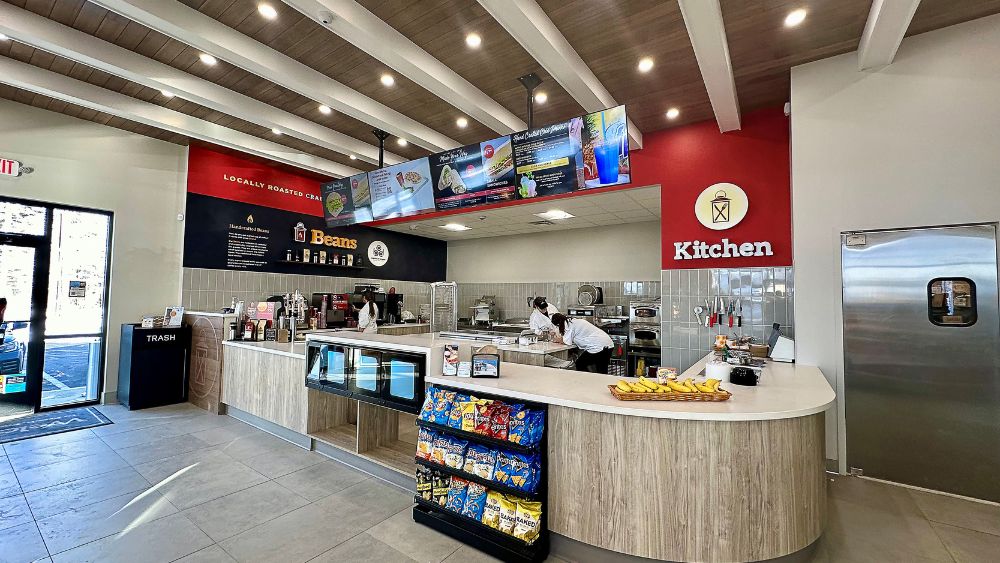
If you lead a convenience store or manage fuel delivery operations, you know the feeling. Your best team member just called out sick, a delivery is running late, and there are customers three deep at the counter. Everything that normally runs smoothly is suddenly hanging by a thread.
This kind of pressure is not the exception in your industry. It is the norm. The question is not whether your team will face it, but whether they know what to do when it hits.
What Actually Breaks Down Under Pressure
When stores are short-staffed or overwhelmed, teams almost always cut corners — not out of laziness, but as a survival instinct. Steps get skipped during busy times. Customer interactions get shortened. Team members improvise carelessly because no one told them what to do when short-staffed or overwhelmed.
The downstream effects are predictable: brand standards decline, the customer experience becomes inconsistent, staff stress increases, and the cycle continues. The good news is that all of this can be prevented without adding more staff or increasing the budget. You just need better process design and improved training.
Strategy 1: Design Simplified Stress Mode Processes
Every operation has two modes: normal and slammed. Most leaders only design for normal. That is the first mistake.
Stress Mode Processes are leaner versions of your standard processes, built specifically for busy moments. They do not lower your standards; they protect them by eliminating anything that adds time without adding value to the customer experience.
For example, under normal conditions your team might walk a customer through your loyalty program signup step by step. When the store is packed, a Stress Mode version might look like this: ask if the customer is a member, and if not, hand them a card with clear join instructions they can act on later. The customer is served quickly, the loyalty opportunity is preserved, and the line keeps moving.
Strategy 2: Adopt the Right Speed Policy
Speed matters in your business. Customers pulling up to a pump or stopping in for a quick snack want to be served quickly and they notice when they are not. But speed without standards is not a solution.
The Right Speed Policy is built around a simple principle: go only as fast as it’s possible to go while getting the process 100 percent right, but no faster. Brand standards come first. Speed is a requirement too, but the moment speed leads to skipped steps or errors, you have traded short-term relief for a long-term problem.
Think of a restaurant that limits the number of tables it seats during a rush to what the kitchen and servers can actually handle with quality. That is a quality decision, and the same thinking applies to your operation.
Strategy 3: Make Use of Your Team
If there is more than one person on a shift, you have a team. Use it like one.
Cross-training is the foundation. When every team member can fill in for other roles, volume spikes become manageable rather than chaotic. During normal volume, one person operates the register while another restocks. When the line grows, both shift to the register until the line shrinks. Work flows to where it is needed most because cross-training and clear policies are in place.
Strategy 4: Train to 100 Percent
Most training programs are designed for ideal conditions, which is exactly the wrong approach for an industry where conditions are rarely ideal. Training to 100 percent means preparing your team to deliver to your brand standard under all circumstances. There are four pillars:
- All-conditions training: Explicitly prepare for understaffed and high-volume scenarios, not just normal days.
- Mission and requirements clarity: Every team member should understand your business mission and key customer requirements, the why behind following the process even when it is hard.
- Scenario practice: Identify unusual situations and practice them. What does your team do when the POS goes down during a rush? Train for those moments.
- Escalation clarity: Define exactly which situations require a team member to call for management. Clear guidelines remove hesitation and reduce errors.
Capability built during training time is capacity preserved during crunch time.
Strategy 5: Build Local Empowerment
Your team members are on the front lines. When something unexpected happens, they often cannot wait for a manager before making a call. That is why local empowerment matters.
Empowerment means giving your team clear boundaries within which they can act confidently without escalating every decision. Those boundaries are defined in advance, not figured out in the moment. When the gas pumps stop working, a team member who knows the protocol does not freeze. They act.
On the other side of that boundary, define the situations that must always go to management immediately. When those lines are clear, your team can act decisively on everything below them without second-guessing.
Putting It All Together
Consistent performance under pressure is not a matter of hoping your team rises to the occasion. It is a matter of designing for the occasion in advance. The teams that hold their standard when things get hard are the ones whose leaders took the time to prepare them for it.
Designing processes that hold up under every operating condition is among the highest-leverage investments a leader can make. The McClaskey Excellence Institute works with service organizations to build that kind of operational foundation, helping teams execute consistently when conditions do not cooperate.
Start with one of these five strategies this week. Pick the one that addresses your most pressing vulnerability and build from there. Before long, your team will be the one others in your market are watching, wondering how you pull it off.
Share your success stories with us. Want some help doing this? Just reach out.
ABOUT THE AUTHORS
David J. McClaskey is President of the McClaskey Excellence Institute, an operational excellence consulting and training organization. Billy Schaefer is Vice-President. The McClaskey Excellence Institute has guided organizations to eight Malcolm Baldrige National Quality Awards and trained more than 15,000 leaders. See our contact information below to find out more.